

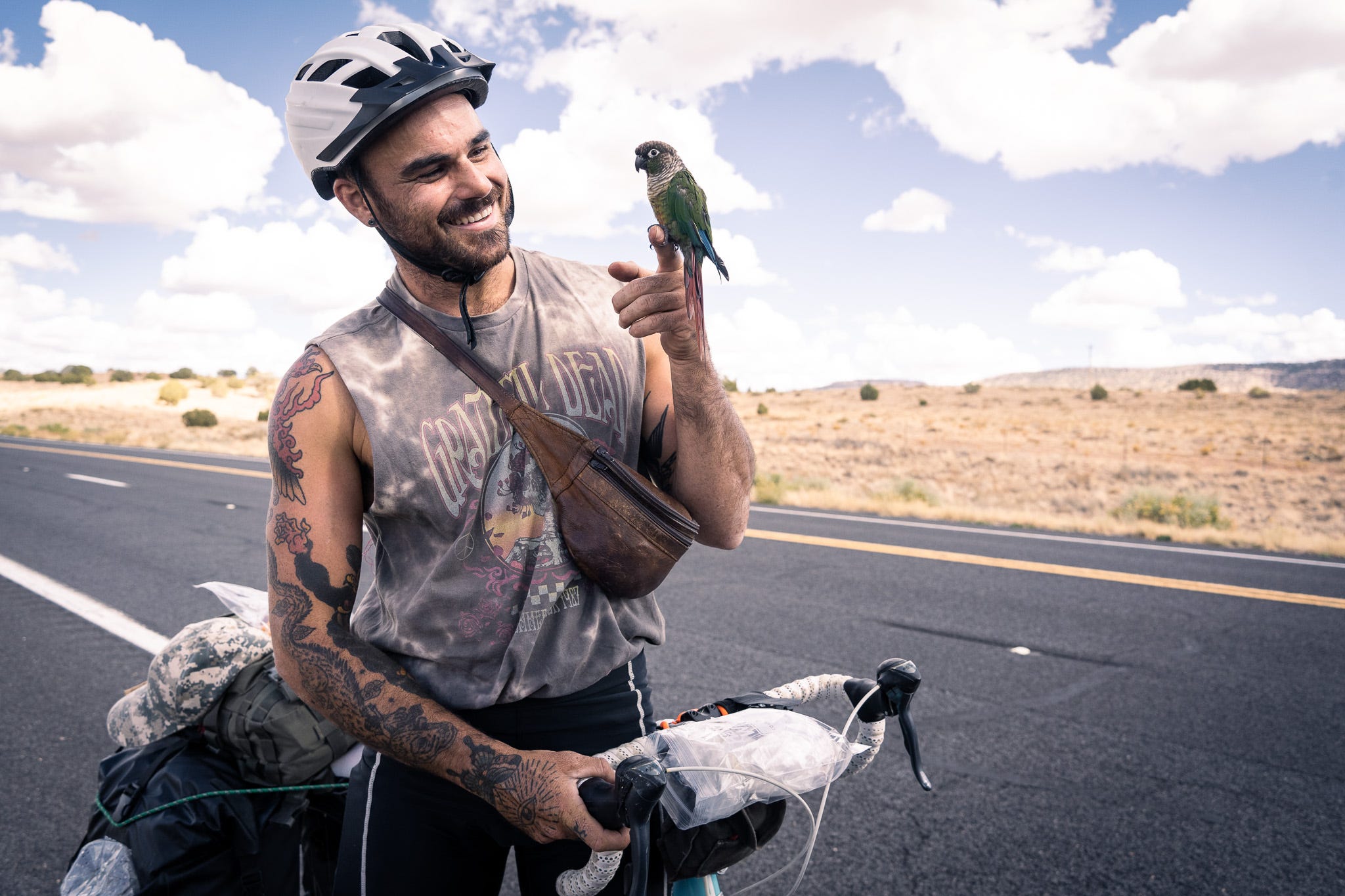
It’s been 15 years since my first biking trip through southern Chile. Since then, I’ve dreamt of hitting the road again.
But there’s always an excuse, innit?
I don’t have the time; I don’t have the money, I don’t have the gear; I don’t have the company (in my case, they all applied).
Sociologist Hartmut Rosa has noted how the modern recipe for happiness teaches us to first accumulate the resources and then go for what we want. The danger, he warns, is that we get stuck in an eternal preparation—kinda like the protestant deferral of happiness to the afterlife that Max Weber noted was at the heart of the spirit of capitalism.
The solution—my solution—has been to push past the excuses my mind makes up, my inner naysayer, and trust that the universe aligns to meet me halfway when I go for what I want with determination. In this case, to go on a biking adventure through the US desert during my visit to Las Vegas in September.
Importantly, I’m practicing how to apply spiritual teachings—universal laws or principles—to see if there is an easier way to move through the experiment of life.
Let go of the old in order to receive the new
One of these principles is the idea that we need to let go of our attachments before we can receive the resources we need to reach our goals.
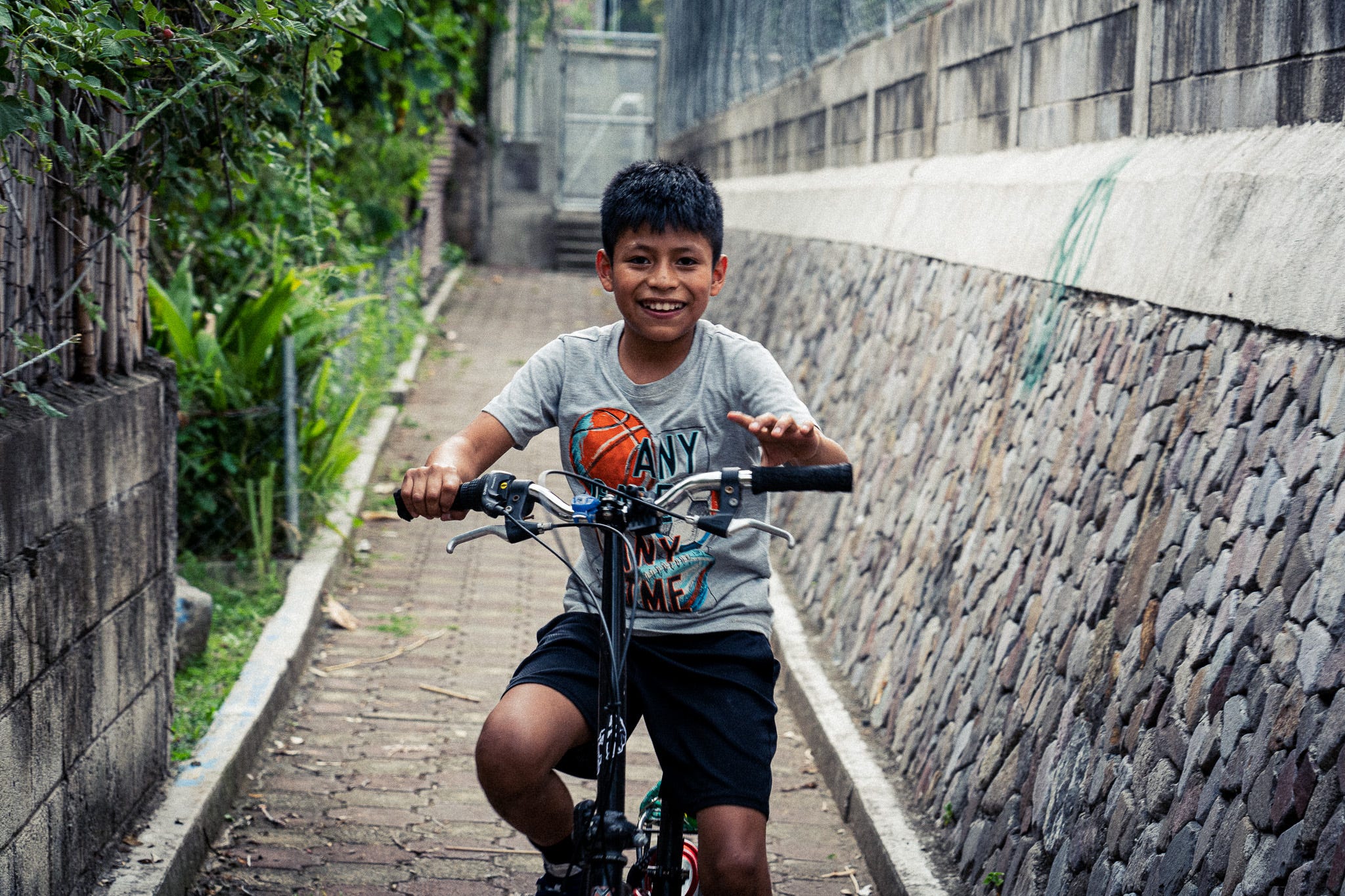
So, ahead of my trip to Vegas, I left my rickety foldable bike—my only obvious means of transport—with my buddy Ventura in Guatemala, trusting that I would find a better solution than the amusing-bordering-to-ridiculus idea of biking on a bike built for someone half my size.
And surprise—as soon as I had let go of what seemed to be my most likely means of transport (at the time), I got a text from my buddies Dell and Cerissa, who live in Vegas and upon hearing rumors of my planned adventure, offered to equip me with a roadbike, lightweight tent, and camping gear—even the food I needed for my mini expedition.
Spiritual principle confirmed.
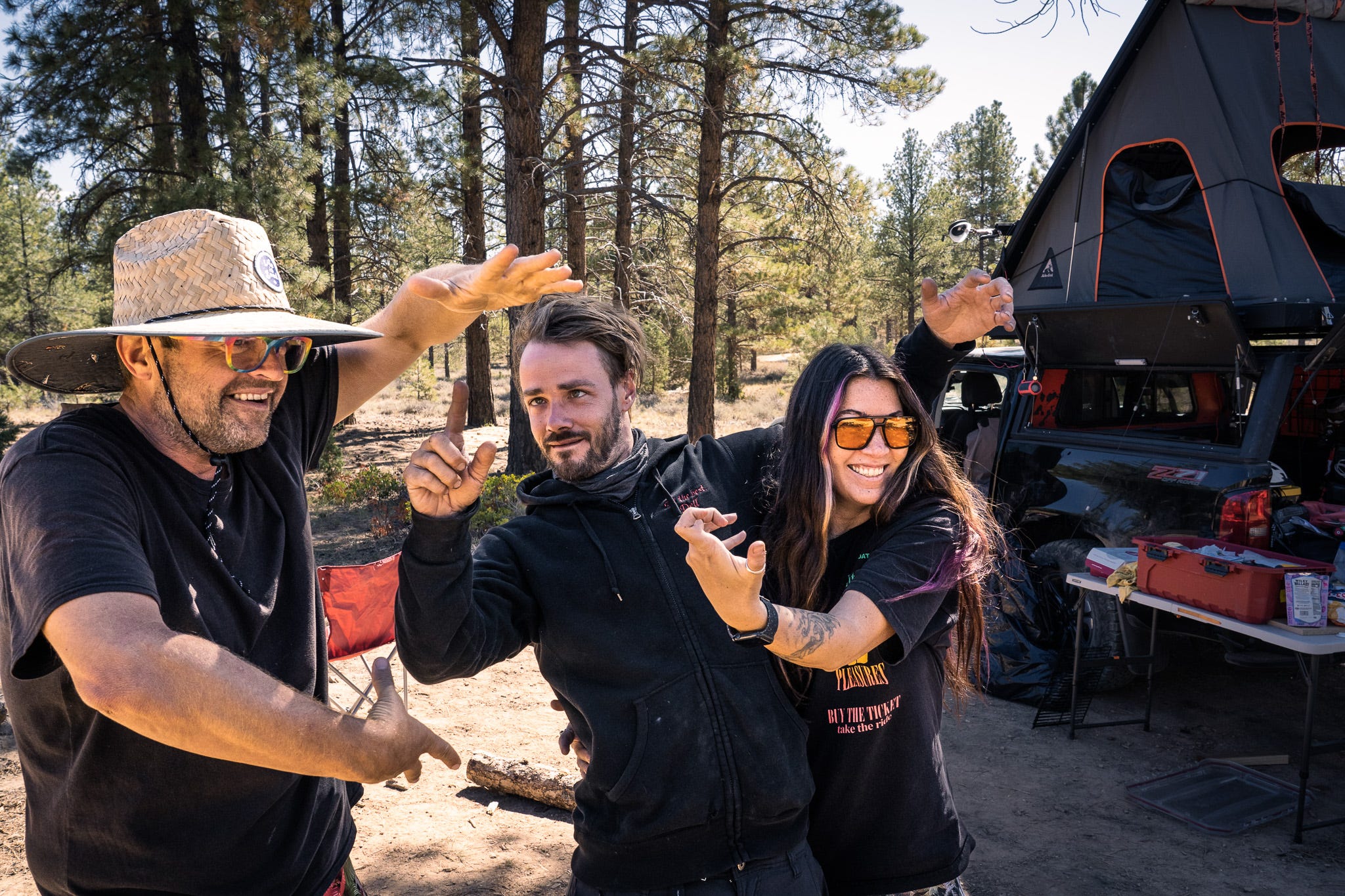
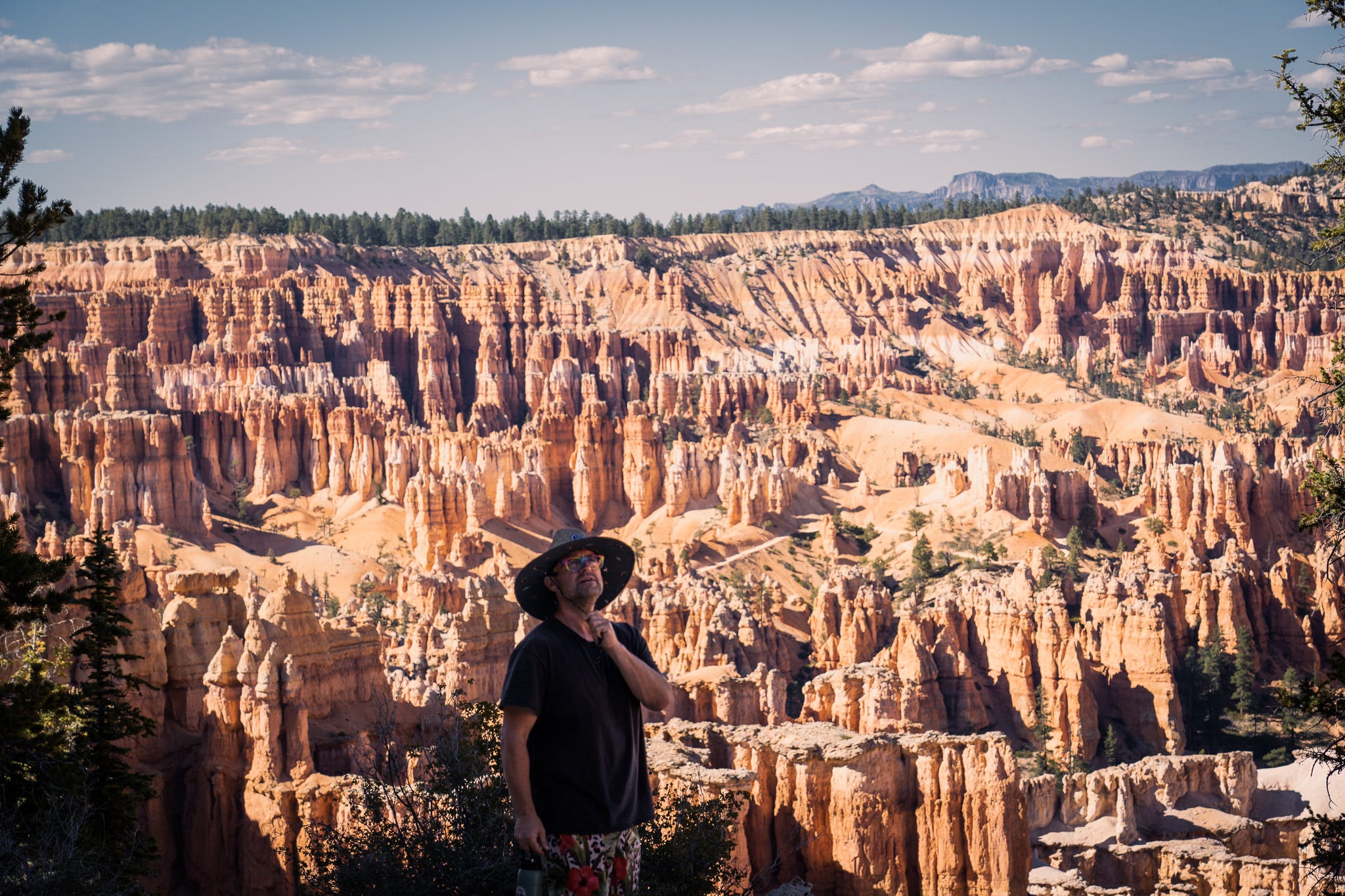
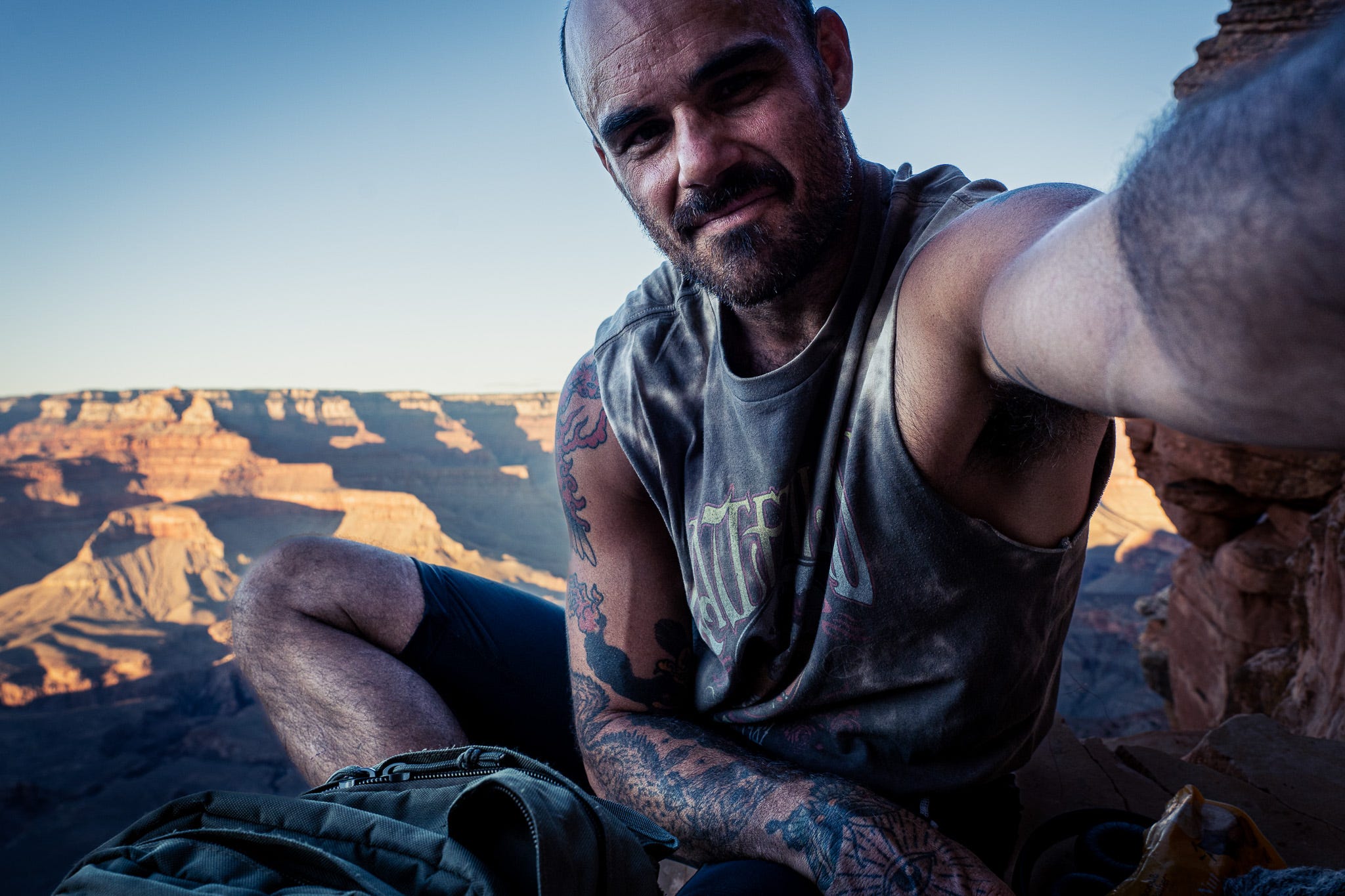
As if in a nod of acknowledgment that you can really manifest whatever you set your mind to, Dell, Cerissa, and our mutual friend Caleb, decided to drop me off at Bryce Canyon in southern Utah, joining me for the first leg of the adventure, and leaving me at the starting point of a route of scenic highlights that took me through some of the most stunning natural monuments in America.
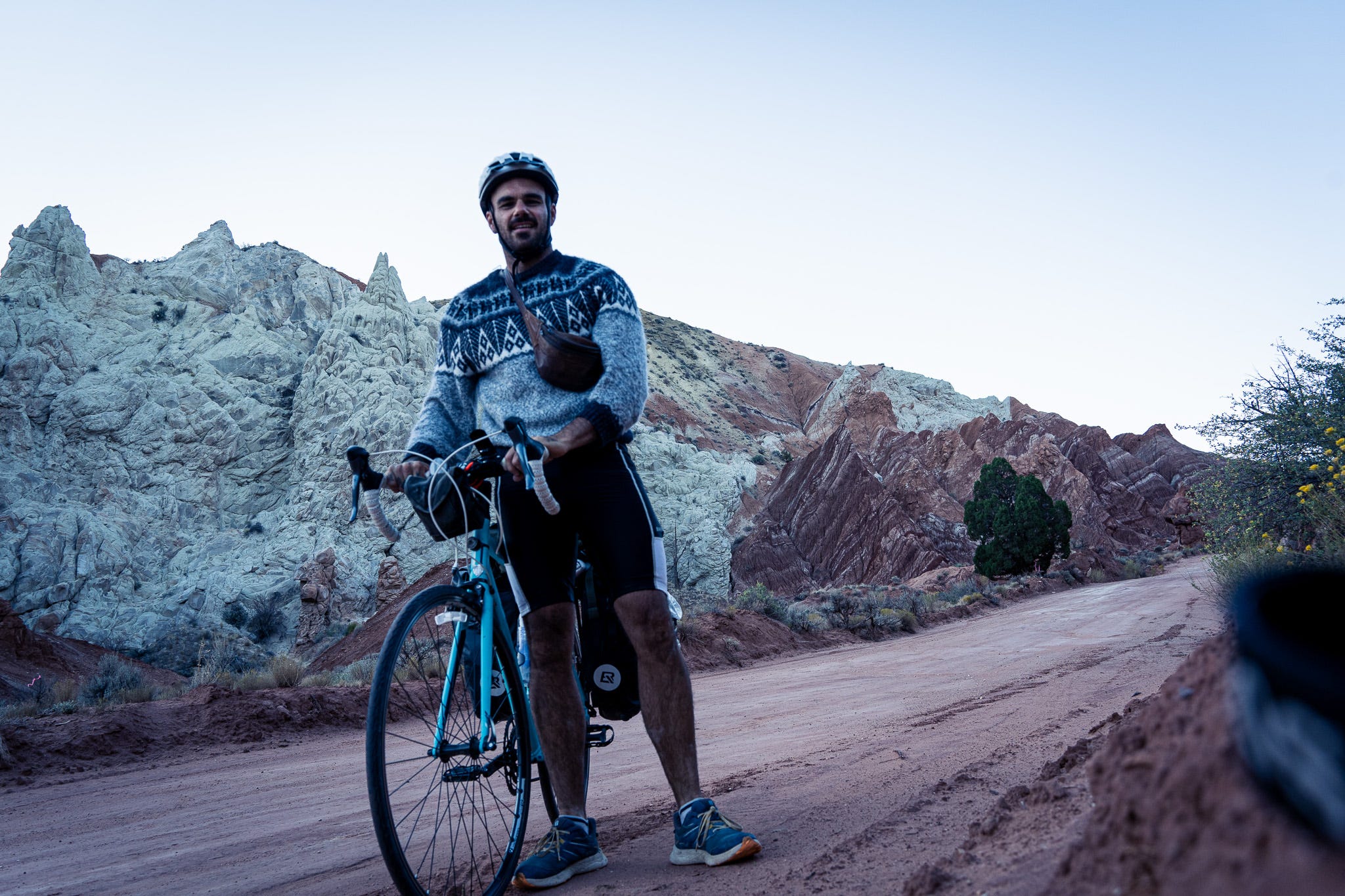
The contemporary cowboy wears padded lycra
From Bryce Canyon, I biked my way south through the landscapes Hollywood transformed into the mythos of the Wild West. In American popular culture, they may epitomize the fantasy of the self-made, tobacco-smoking, gun-slinging cowboy-man. And in a sense, this was the role I had unwittingly assumed.
Although I didn’t ride a horse, I rode a bike, and although I did not wield a gun, I did eat canned beans under an immaculate starry sky.
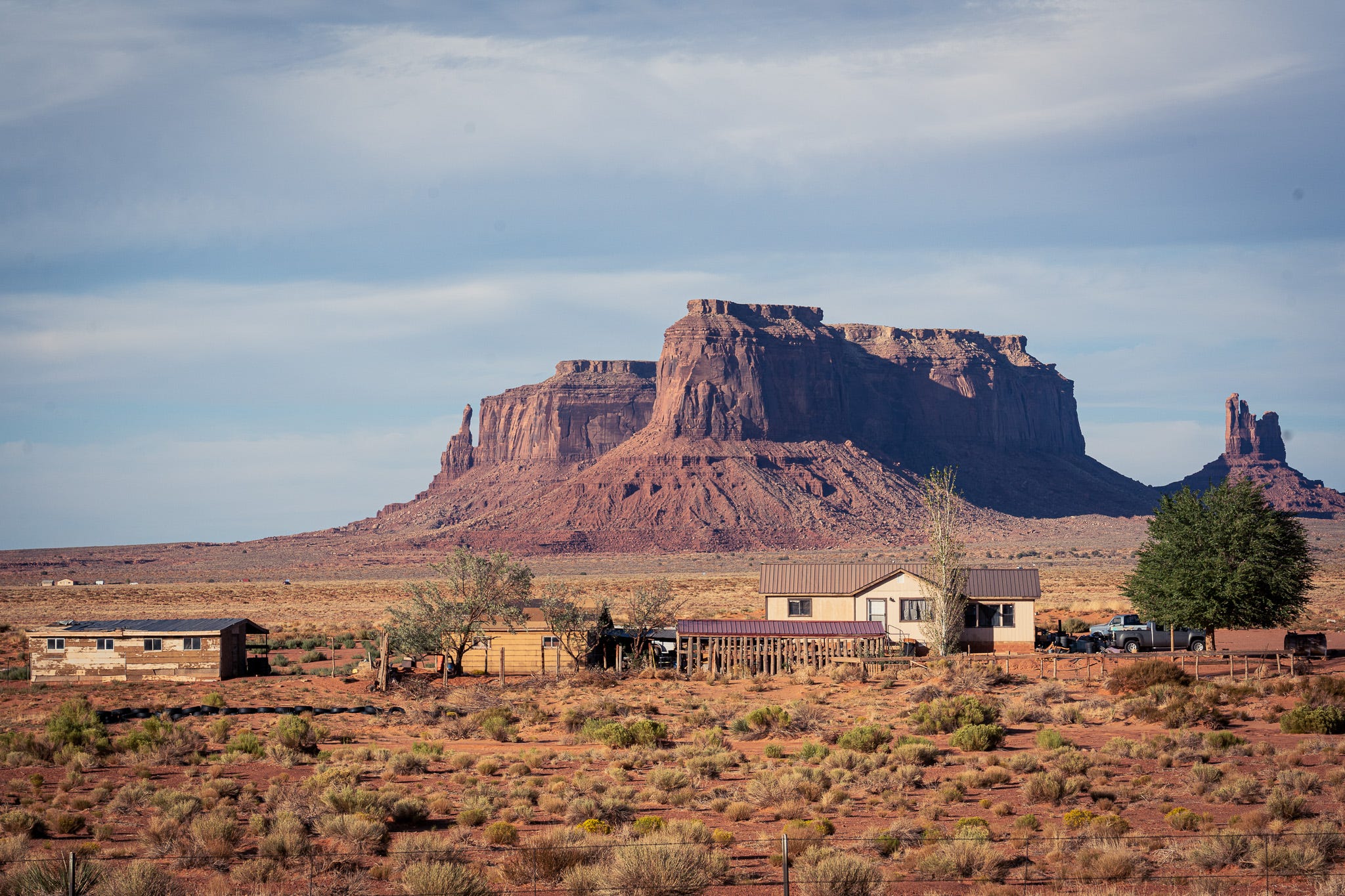
However, technology was not what primarily distinguished my cowboy story from those of the past. Rather, my journey through the desert took me to what I soon realized was not the US at all, but the Navajo Nation. And my encounter with the Native Americans was not a gun-blazing battle, but a meaningful encounter between fellow humans.
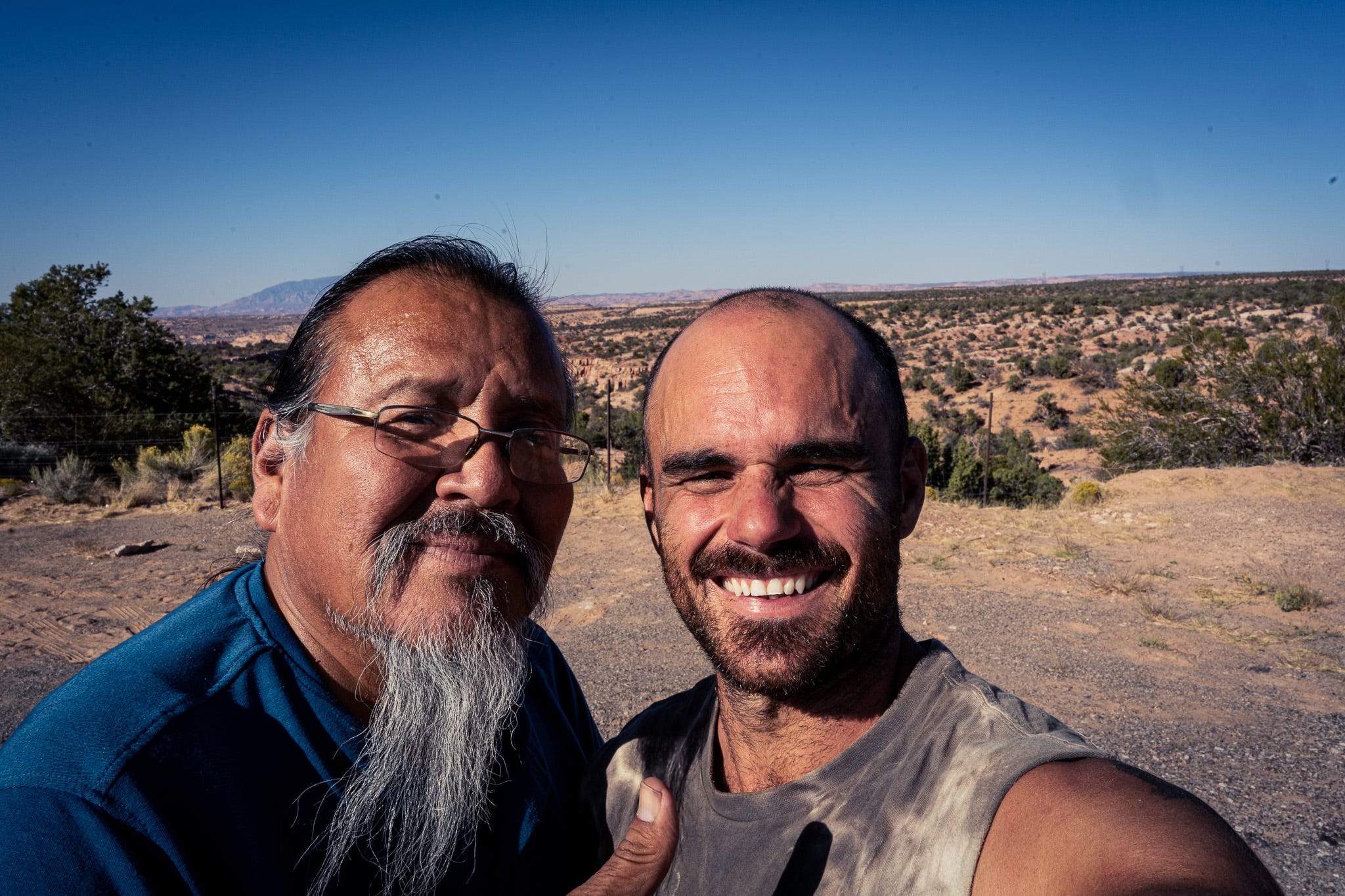
The transformative experience of receiving help
Some cancelled their plans to give me a ride. Others shoved me dollar bills “for the road”. They shared their food, their stories, their music, their hopes and fears, their faith, their prayers, their wisdom, and their places of worship to the land with a dehydrated and sweaty white bro on a roadbike.
“When I saw you at the side of the road, I hesitated,” one of the truck drivers who gave me, my bike, and my flat tire a 20-mile ride to Tuba City. “I thought you might be like the white dudes I’ve met in the past.” He’d had a bad experience with a hitchhiker but decided to practice kindness nonetheless. “I’m glad I picked you up,” he said as he set me off on the road that marks the border between the Navajo and Hopi tribes.
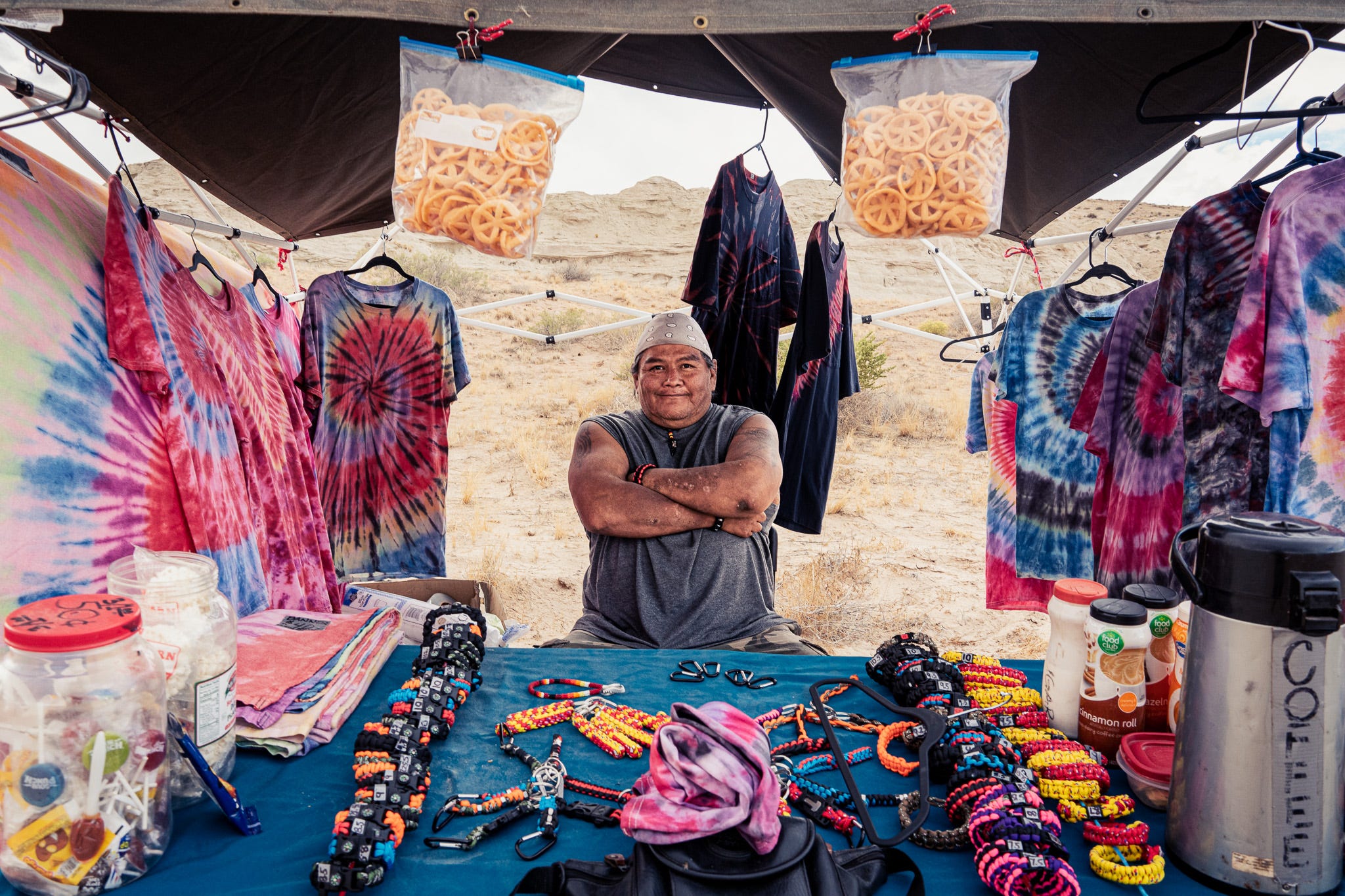
Let’s take a moment to reflect on the fact that despite centuries of resistance to colonial violence, the Navajo of today received me with generosity and warmth.
Note to self: the next time I’m about to be swayed by my white savior complex—the Navajo helped me, not the other way around.
Lesson #1: Money is not the prerequisite for getting what you want
Summing up: once I got past my own excuses (and let’s be honest, after almost a year of kamikaze sailing, it wasn’t that hard), I learned that when you think of currency and resources as abstract terms—as flow of energy—the world is ripe with possibilities.
But it requires letting go of that late capitalist belief that to pursue our passions and follow our dreams, we first need to accumulate money and resources. You might object that downplaying the importance of money sounds a little daft, and it would not be entirely untrue.
But also, through my eleven and counting months of travel, I’ve learned that monetary exchanges are not the only kind of exchanges we humans make, and that giving and receiving help freely can be one of the most radical acts in a world where energy exchanges are increasingly quantified and transformed into monetary value.
Lesson #2: Relationships are built through reciprocity
Among anthropologists, such “energy exchanges” are analyzed as “reciprocity”, and friendships are not just resources we tap into, but relations that emerge from the willingness to give or receive without immediately balancing the scales.
Meaningful relationships are built through the trust that balance will be restored over time. We have all heard some iteration of the phrase “I trust you’ll return the gift when you can.”
The time it takes between the initial help, support, or gift is given to the moment it is returned can even be a symbol of the strength of a relationship. Perhaps, then, the giving and receiving of help and support between categories of people who have been pitted against each other is the antidote to current conflicts.


Lesson #3: Abandon the measuring cup
But also, the next level of reciprocity might just be found in the idea of “paying it forward” and the acknowledgement that we’re all part of an interconnected web of relations that flourishes when we give and receive freely—without having to rely on the measuring cup.
And maybe, when we trust that the universe has its own way of balancing the scales, we will finally be able to free ourselves from our current compulsion to put a price tag on everything, or to see accumulation of resources as the necessary precursor to freedom and joy.